
Download high resolution image [JPG 3026.77 KB]
Community members are being reminded about the danger of bats after a boy was scratched by a flying fox while attempting to rescue it.
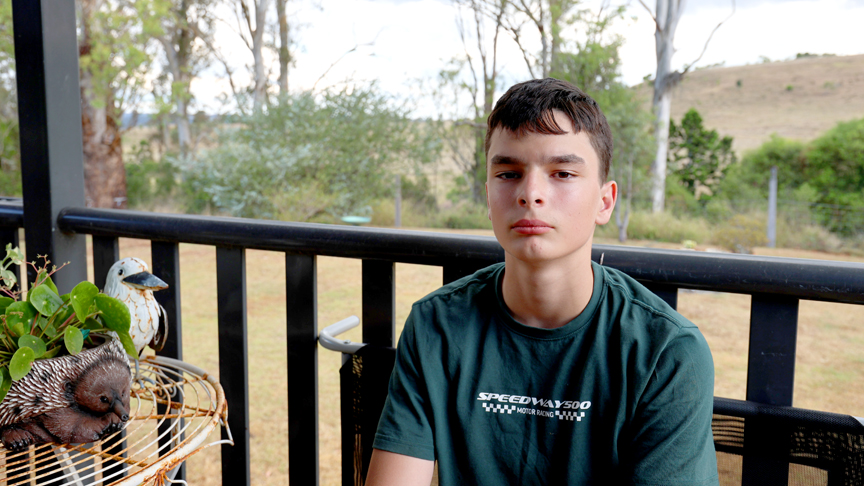
William, 14, was scratched by the flying fox while attempting to free it from a barbed wire fence on the family’s property near Crows Nest, on 10 October.
The family’s well-intentioned intervention led to potential exposure of fatal infections, such as Australian bat lyssavirus, and a series of medical treatments.
William’s father, Mark said while the family had the bat’s best interests in mind, they simply weren’t aware of the risks involved.
“We didn’t want the flying fox to suffer, and we still wouldn’t — but after seeing William need painful injections and a series of vaccinations for all of us, we now understand the risks and would get advice first in future,” said Mark.
“If you want to help wildlife, contact specialists or your vet before you touch anything. It’s better to be informed and protected than to become a patient yourself.”
After enduring five injections to treat a bat scratch, William has a word of caution for would-be rescuers.
"The bat was cute and I felt bad for the little fella but after receiving the painful shots, I'd say to others – don't do it!"
The attempted rescue of the entangled flying fox has become a public health warning about handling bats.
Darling Downs Health Public Health Physician, Dr Alan Lam said compassion is instinctive, but a single scratch or bite can expose people to serious, potentially fatal infections.
“While there is the temptation to help sick or injured bats or flying foxes, it is imperative that people do not touch them unless they are appropriately protected,” said Dr Lam.
“This protection includes vaccinations for rabies, appropriate training in bat handling and the
use of personal protective equipment.
“Bats and flying foxes may carry bacteria or viruses, including the deadly Australian bat lyssavirus,” he said.
The reminder comes as a number of people throughout the State have been scratched or bitten by bats or flying fox recently, which is more common during hot weather.
Dr Lam said transmission of lyssavirus from bats to humans was from saliva usually through
a bite or scratch and there is a single solution to avoid exposure.
“The best protection against being exposed to the virus is for members of the community to avoid handling any bat or flying fox,”
Darling Downs Health Public Health Physician, Dr Alan Lam
“We urge anyone who has been scratched or bitten by a bat or flying fox to seek medical advice immediately.”
If transmitted, lyssavirus causes a rabies-like disease which is fatal as there is no known effective treatment. Post-exposure management, including wound care, rabies vaccines and human rabies immunoglobulin, is recommended for anyone who has been potentially exposed to reduce the risk of infection.
Injured or sick bats or flying foxes can be reported to the RSPCA on 1300 ANIMAL (1300 264
625), Department of Environment, Tourism, Science and Innovation (1300 130 372) or your local wildlife care group/rescuer/carer.