
Download high resolution image [JPG 6549.23 KB]
![Download high resolution image [JPG 6549.23 KB]](https://www.darlingdowns.health.qld.gov.au/__data/assets/image/0026/491831/260617-incontinence-care-fullres.JPG)
A common condition affecting up to one in three people is being highlighted across the Darling Downs this World Continence Week, with clinicians emphasising that early support can dramatically improve quality of life.
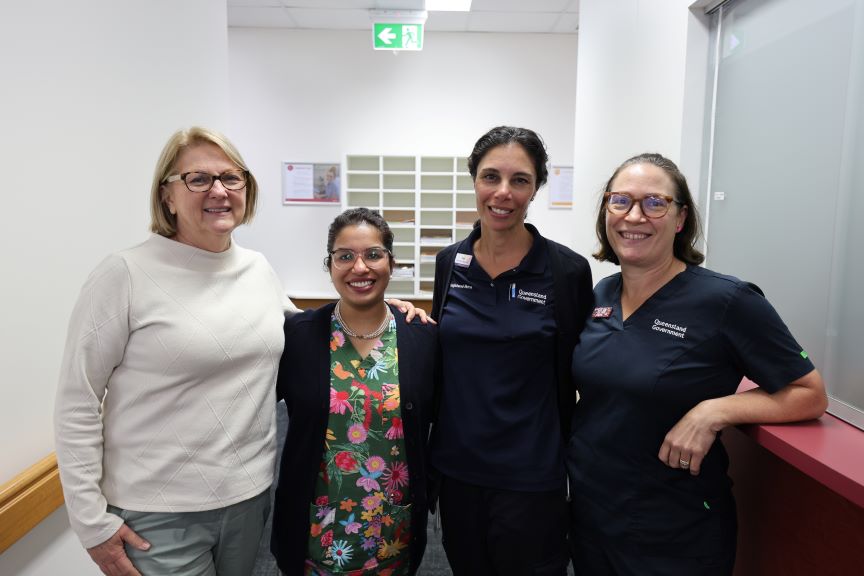
Toowoomba-based Urogynaecology Nurse Practitioner, Julie Westaway is raising awareness of bladder, bowel and pelvic floor dysfunction which despite affecting people of all ages and genders, the conditions often go untreated.
Ms Westaway leads a small specialist service at Darling Downs Health, supporting more than 800 patients each year.
“One in every two to three women will experience bladder, bowel or pelvic floor dysfunction in their lifetime, yet many suffer in silence.”
Urogynaecology Nurse Practitioner, Julie Westaway
“The earlier we see people, the more likely we can dramatically improve their quality of life.”
Servicing a population of around 300,000 people, the team provides critical specialist care in a region where access can be limited.
Her team focuses on patients with severe symptoms and reduced quality of life, using triage systems to ensure those most in need are seen quickly while also supporting early intervention pathways across the community.
Ms Westaway, one of Australia’s only Urogynaecology Nurse Practitioners, established the local service more than 15 years ago to address gaps in care.
Despite how common these conditions are, many people delay seeking support due to stigma and embarrassment, access barriers and competing priorities, while others avoid it due to fear of serious diagnosis.
“By seeking support early, many people can avoid their symptoms progressing and achieve better outcomes,” she said.
With the right care, even small improvements can have a major impact.
“For someone going to the toilet 20 times a day, reducing that to 10 can be life-changing,” Ms Westaway said.
“People sleep better, they regain confidence, they return to social activities and they’re less at risk of falls. The benefits extend well beyond the physical symptoms.”
Treatment options may include dietary and fluid management, pelvic floor retraining, medications and advanced therapies such as tibial nerve stimulation, a program introduced locally following Ms Westaway’s training at King’s College London through a Churchill Fellowship.
World Continence Week (15–21 June) aims to reduce stigma and encourage people to seek support sooner.
“Bladder and bowel issues can affect anyone, and awareness is key to helping people feel confident to get help,” Ms Westaway said.
The Darling Downs service takes a holistic approach, recognising that bladder and bowel dysfunction is often linked to broader health issues.
For support or more information, people can speak with their GP or contact Continence Health Australia.