
Download high resolution image [JPG 2340.36 KB]
![Download high resolution image [JPG 2340.36 KB]](https://www.darlingdowns.health.qld.gov.au/__data/assets/image/0025/493522/260625-Nat-Hobbs-Award-fullres.jpg)
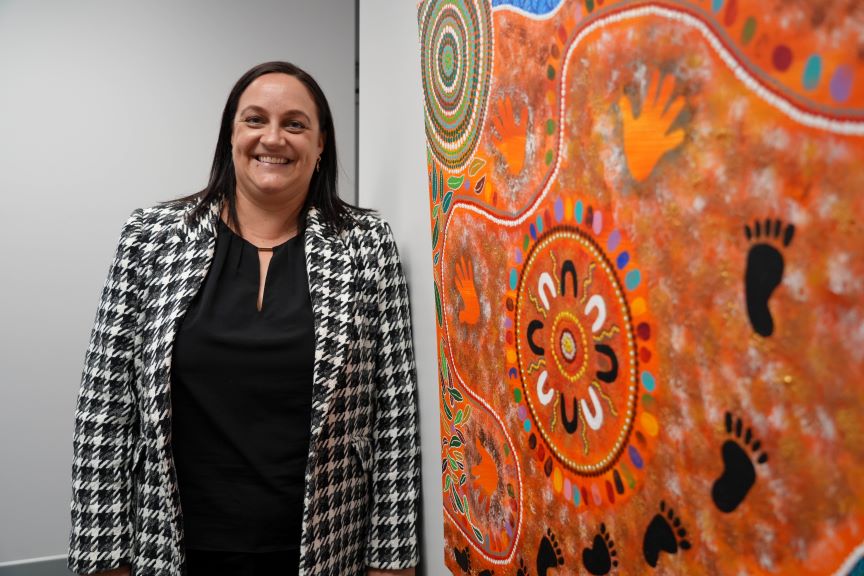
Darling Downs Health midwife, Natalie Hobbs, has been recognised with a national award for her leadership and work in improving maternity care for Aboriginal women.
A proud Kamilaroi woman, Ms Hobbs recently received the Partnering with First Nations leadership award from the Preterm Birth Prevention Collaborative, which is a nation-wide organisation dedicated to lowering early births across Australia.
Darling Downs Health Service Chief Executive Annette Scott PSM said the award was well-deserved recognition of Ms Hobb’s dedication to health equity.
“As our Assistant Director of Nursing and Midwifery for First Nations, Ms Hobbs has been instrumental in making sure we listen to Aboriginal and Torres Strait Islander women and their families on how they want their care to be delivered,” said Ms Scott.
“This award is also recognition of the work Ms Hobbs has done to build strong relationships with our community partners including Carbal Medical Service and Goondir Health Services.”
Natalie Hobbs said she was humbled by the award.
“When I studied midwifery, this was the space that I wanted to land in. There's such health inequity between Aboriginal women and Aboriginal people in general, and the rest of the community,” Ms Hobbs said.
She said with the support of the Aboriginal and Torres Strait Islander Health Division she would continue work to improve the delivery of care.
“We know that when we listen to their voices, we have a better chance of actually changing health outcomes.”
- Midwife, Natalie Hobbs
According to the Australian Preterm Birth Prevention Alliance, preterm births among Aboriginal and Torres Strait Islander mothers are approximately 1.7 times higher than that of non-Indigenous mothers.
Preterm births are associated with increased rates of death and disability.
As part of her work, Ms Hobbs will establish a new First Nations maternity consumer advisory group – bringing together Aboriginal and Torres Strait Islander women who birth in Toowoomba to help shape the care services they receive.
“This will be another avenue for us to really hear from women about what is needed,” she said.