Download high resolution image [JPG 1765.36 KB]
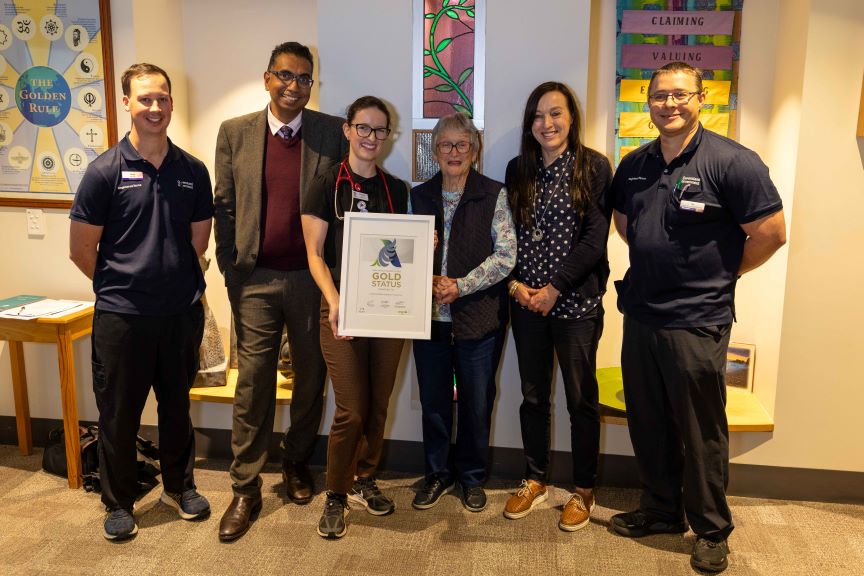
Toowoomba Hospital’s Geriatric, Adult Rehabilitation and Stroke Service (GARSS) has celebrated a major achievement during a special reunion with a former stroke patient.
GARSS was recently awarded its third World Stroke Organization (WSO) Angels Gold Award, after first achieving gold status in 2025.
Darling Downs Health Service Chief Executive Annette Scott PSM said the award was a major achievement.
"This recognition highlights the gold-standard stroke care provided at Toowoomba Hospital for the Darling Downs community - from hyperacute emergency treatment through to acute care and rehabilitation."
Darling Downs Health Service Chief Executive, Annette Scott
“Only a small number of hospitals in Queensland have received this award more than once, and to achieve this in a regional centre is something we are extremely proud of.”
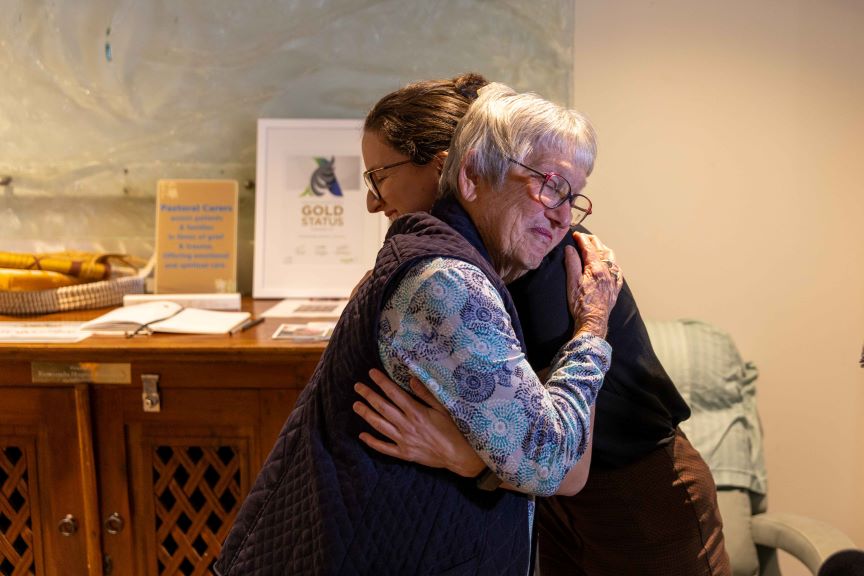
GARSS staff celebrated the achievement with former patient Carmen Golder and her daughter Lessa Darveniza.
Mrs Golder was taken to Toowoomba Hospital in March with a significant blood clot but due to the excellent care initially provided by GARSS and by staff at Princess Alexandra Hospital, the 88-year-old has now fully recovered.
Ms Darveniza said the level of attention and care provided to her mother was reassuring.
“The team was in the room with mum constantly monitoring her and it was a very professional, caring process,” said Ms Darveniza.
Mrs Golder said she was thrilled with her recovery and that she had managed to retain her driving license.
“I've got a second chance, and I feel very humbled because I've got some friends that haven't made it just like I have,” she said.
GARSS Clinical Director Dr Nisal Gange said staff were humbled by Mrs Golder’s praise.
“The national standard for treatment is 60 minutes, in Carmen’s case we did that within 38 minutes,” Dr Gange said.
“Every minute we save gives patients a much better chance, because more of their brain can be protected from damage.”
Dr Gange said the award also reflected the hard work across teams at Toowoomba Hospital.
“To provide exceptional care like this often relies on collaboration across many departments including emergency, radiology, nursing, allied health, rehabilitation, intensive care, and medical teams,” he said.
Dr Gange urged people to take action to prevent strokes such as checking for high blood pressure and to stop smoking.
“Everyone who's at the age of 50 and above should go and see your doctor every six months and make sure things such as blood sugar and cholesterol levels are within normal limits.”
While people could be reassured about the quality of stroke treatment services in Toowoomba, it was important they also recognise signs of a medical stroke emergency.
People should be aware of the acronym FAST to identify early warning signs of stroke:
- F – Facial weakness
- A – Arm or leg weakness
- S – Speech difficulty
- T – Time to act fast
Queensland hospitals with Gold Status
- Sunshine Coast University Hospital
- Gold Coast University Hospital
- Mater Hospital Brisbane
- Townsville University Hospital
- Queen Elizabeth II Jubilee Hospital
- Toowoomba Hospital